
Complete Guide to Rotary Hammer Drills: Mechanism, SDS System & Uses
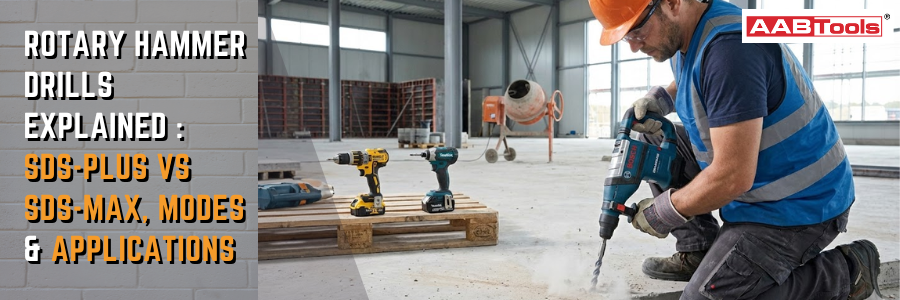
A rotary hammer is an essential power tool for professionals in the construction and maintenance industries. Unlike a standard hammer drill, a rotary hammer provides a powerful pneumatic hammering action, making tasks such as drilling, chiseling, and demolition quicker and more efficient. This guide explains how a rotary hammer works, focusing on its pneumatic hammering system, the dual action of rotation and impact, and the benefits of the SDS chuck for fast, efficient bit changes.
What are rotary hammers and how Do They Works?
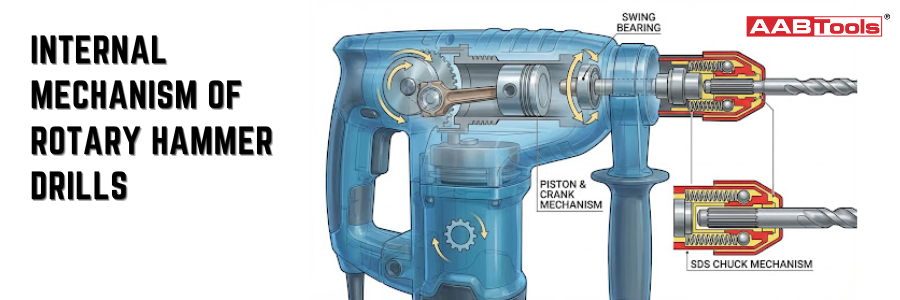
A rotary hammer is a heavy-duty power tool designed for drilling and chiseling into concrete, stone, and masonry. It offers more power and efficiency than a standard hammer drill. This tool combines rotational drilling with a piston-driven pneumatic hammering action, producing rapid, high-impact blows that can easily penetrate dense materials.
Unlike conventional hammer drills, rotary hammers use an air-powered impact mechanism. This air-powered system delivers strong and consistent impact energy even with minimal user pressure, thus making it best for demanding tasks in construction, renovation, and installation.
How the Pneumatic System Works
1. Motor Drives the Crank Shaft
The electric motor spins a crankshaft, converting rotational motion into the start of the hammering cycle. This replaces the basic vibration system of a hammer drill.
2. Swing Bearing Converts Rotation to Linear Motion
A tilted wobble bearing converts the crank’s rotation into the piston’s rapid back-and-forth motion, generating the linear force required for air compression.
3. Piston Compresses Air to Create Impact Energy
The piston moves in a sealed cylinder, compressing air without touching the striker. The pressurized air launches the striker forward, giving rotary hammers higher impact energy, reduced vibration, consistent blows with minimal pressure, and longer tool life, as there is no metal-to-metal contact
4. Striker Hits the Anvil and Drives the Bit
The air-powered striker hits the anvil inside the SDS chuck, transferring force directly to the bit. This impact chain produces thousands of high-energy blows per minute while absorbing internal shock and reducing user fatigue.

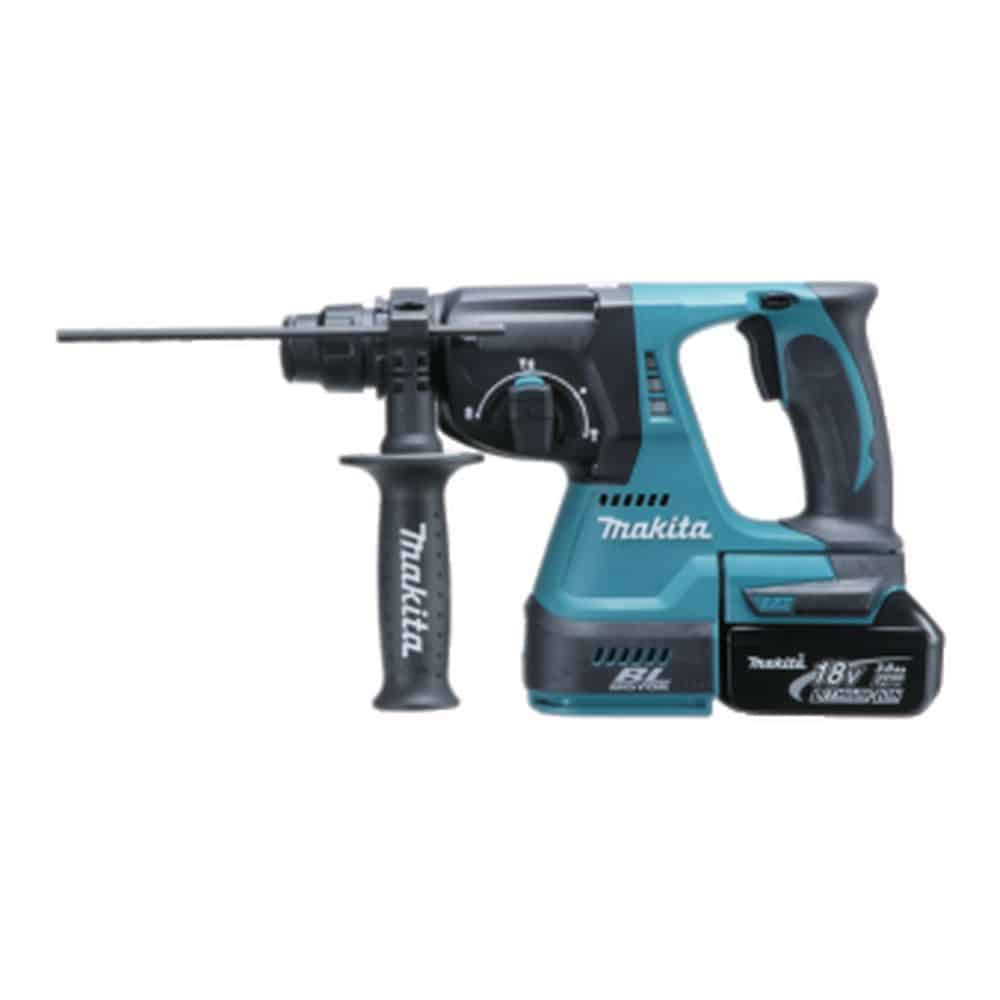

SDS System Explained
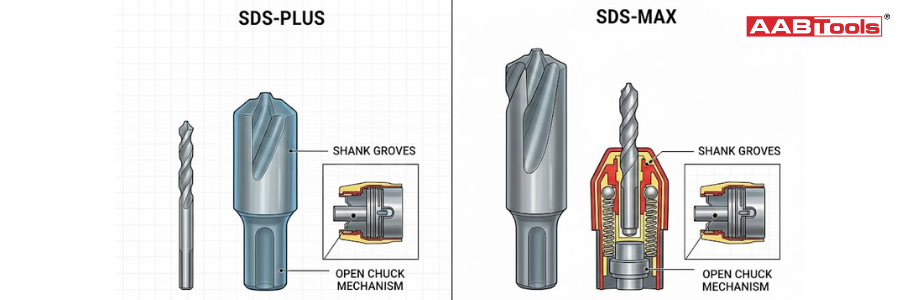
What SDS Means
SDS (Slotted Drive System) is a specialized bit-and-chuck design for rotary hammers, built to handle high-impact concrete drilling. Instead of a tightened chuck, SDS bits use machined slots that lock into the rotary hammer tool with a simple click.
Benefits of SDS
- Quick bit changes as no keys or tightening.
- Better power transfer as Slots deliver direct rotational and impact force with no slippage.
- No bit spin under load as grooved engagement stays locked even in tough concrete.
- Enhanced hammer action so Bits move freely back and forth to maximize impact energy.
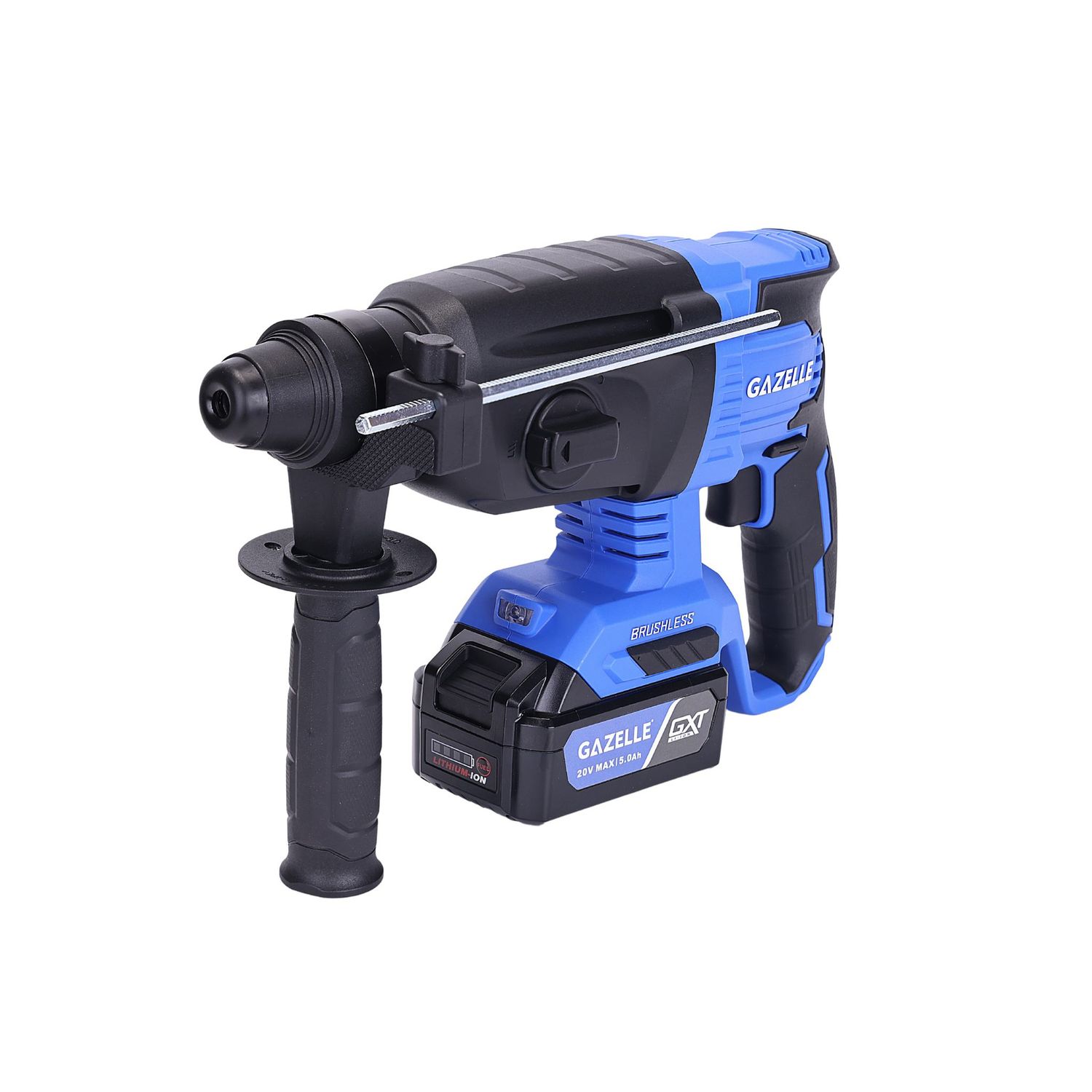
SDS Plus (Light–Medium Duty)
SDS Plus uses a 10 mm shank, best for 4–30 mm holes. Common for electrical installs, anchors, plumbing openings, and general masonry. Lightweight, accurate, and easy to control, hence preferred for everyday professional use.
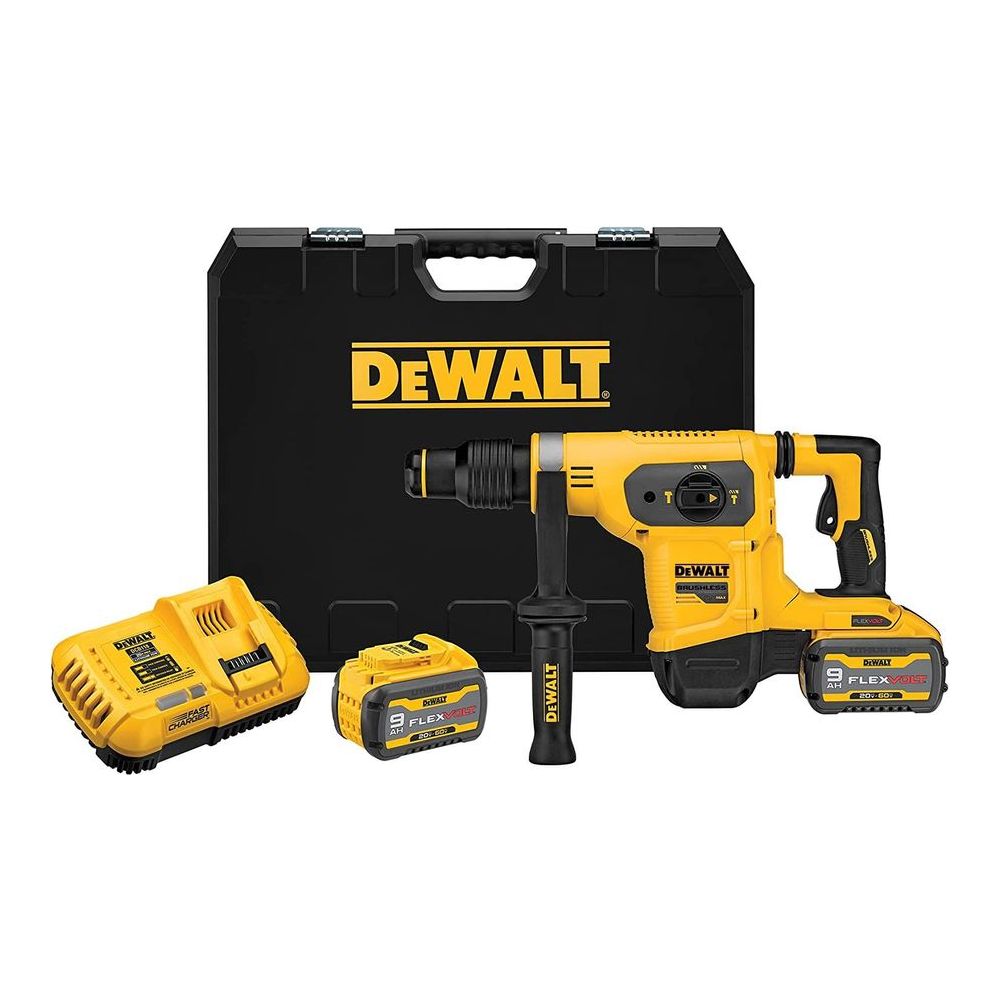
SDS Max (Heavy Duty)
SDS Max uses an 18 mm shank for 32–52 mm bits. Built for large-diameter drilling, chiseling, demolition, rebar doweling, and structural penetrations. SDS Max provides maximum impact energy and stability and is generally used by concrete specialists and contractors on infrastructure projects.
Common Modes on a Rotary Hammer
Rotary hammers are designed to handle a wide range of drilling and chiseling applications, and their functionality largely depends on the operating mode selected. Most rotary hammers include three primary modes - Drill Only, Hammer Drill, and Hammer Only, each engineered for specific materials and tasks.
1. Drill Only Mode
The Drill Only mode disengages the hammering mechanism and uses pure rotation. This setting is ideal for drilling into softer or non-masonry materials such as wood, metal, and plastic, or for applications where clean, precise holes are required. With no impact force involved, this mode operates smoothly and is especially useful when you need accuracy.
2. Hammer Drill Mode
Hammer Drill mode is the most commonly used setting on a rotary hammer, combining high-speed rotation with the pneumatic hammering action. This dual-action mode is specifically designed for drilling into hard materials like concrete, brick, blockwork, and natural stone.
The rotating motion cuts the surface while the hammering force pulverizes the material ahead of the bit, allowing for fast and efficient drilling with minimal user effort. For most construction tasks, this is the go-to mode.
3. Hammer Only Mode
In Hammer Only mode, the rotary hammer disables its rotational movement and uses only the pneumatic hammering mechanism. This turns the tool into a light demolition or chiseling device, perfect for tasks such as removing tiles, chasing channels for electrical conduits, breaking small concrete sections, removing plaster, or performing surface preparation. Because the SDS bit moves freely back and forth without spinning, the user maintains better control during chiseling and material removal.
Active Torque Control in Rotary Hammers
Active Torque Control is an advanced safety and performance technology found in many mid to high-end rotary hammers from brands like Makita, DeWalt, Bosch, Gazelle, and Metabo. It is specifically engineered to protect both the operator and the tool when performing demanding drilling tasks, particularly in reinforced concrete.
During heavy drilling, especially when creating large-diameter holes or working in environments where rebar is present, there’s always a risk that the drill bit may suddenly get stuck. In a conventional tool, the motor continues to drive the rotation, causing the entire tool body to twist violently.
This “kickback” effect can easily result in wrist injuries, loss of control, or dropped tools, posing a serious safety hazard on the job site. ATC prevents this by continuously monitoring the rotational movement of the tool. When it detects a sudden blockage or resistance spike, the system instantly disengages the motor, stopping rotation in a fraction of a second. This immediate response neutralizes the kickback force, allowing the operator to maintain control and significantly reducing the risk of injury.
ATC also contributes to tool longevity. By shutting down the motor when the bit jams it prevents strain on the internal gears, clutch system, and drive components, ensuring more reliable performance over time. This technology is particularly valuable for professionals who frequently drill large holes or often encounter unknown material conditions where obstructions are likely. Active Torque Control has become a critical feature, making modern rotary hammers far safer and more user-friendly than traditional models.
How Does a Rotary Hammer Differ from a Regular Hammer Drill?
Although rotary hammers and hammer drills may look similar at first glance, they operate using completely different mechanisms and are designed for very different levels of performance. Understanding the distinction is essential when choosing the right tool for the job.
A rotary hammer uses a true pneumatic impact mechanism, where a piston compresses air and drives a striker to produce powerful, high-energy blows measured in Joules. This system delivers far greater impact force than a hammer drill, making rotary hammers ideal for drilling into reinforced concrete, heavy masonry, stone, and for performing chiseling or light demolition work. Rotary hammers also use the SDS bit system, which provides secure engagement, superior power transfer, and the ability for the bit to move freely during hammering. Rotary hammers are built for frequent, heavy-duty use on construction sites and in industrial environments.
Regular hammer drill relies on a pair of mechanical gears that rapidly click together to imitate a hammering effect. While this mechanism is adequate for drilling into brick, blockwork, and other light masonry, it produces far less impact energy than a rotary hammer. Hammer drills accommodate standard round-shank drill bits and are generally lighter and more affordable, making them suitable for occasional home use or general-purpose tasks.
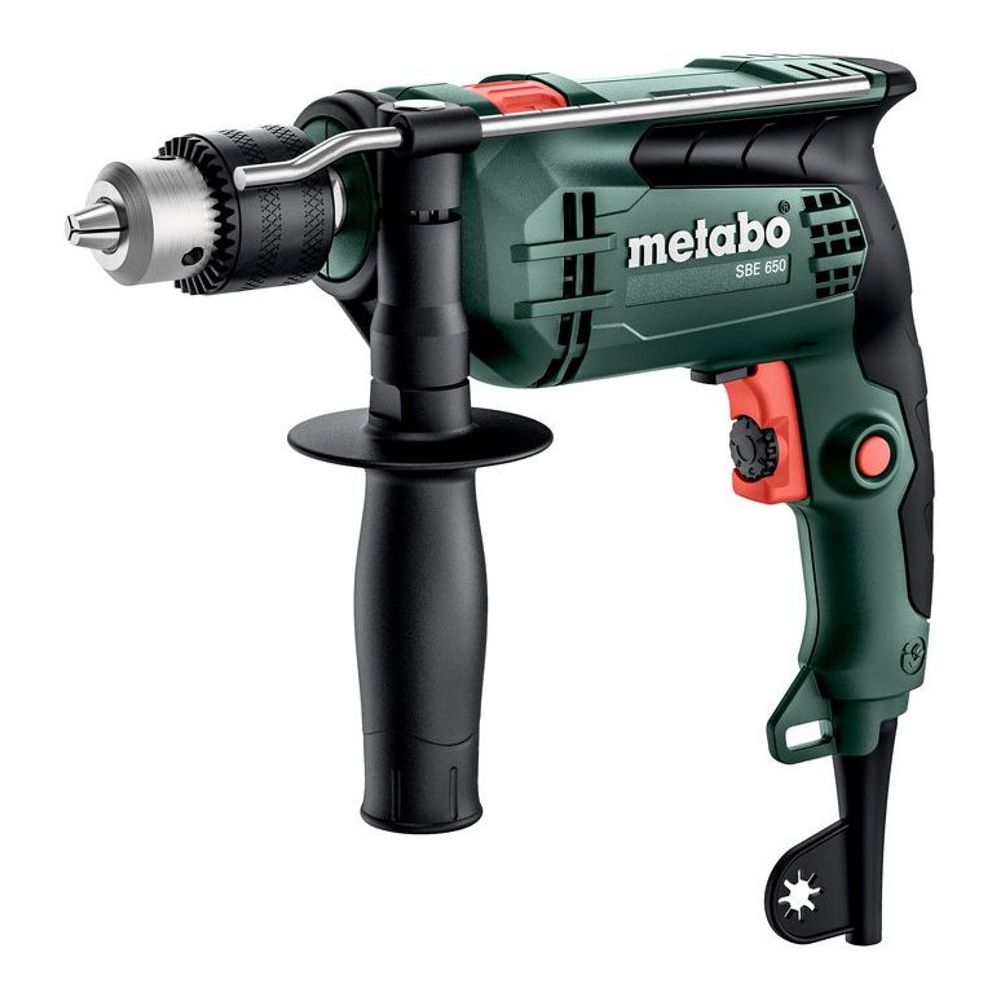

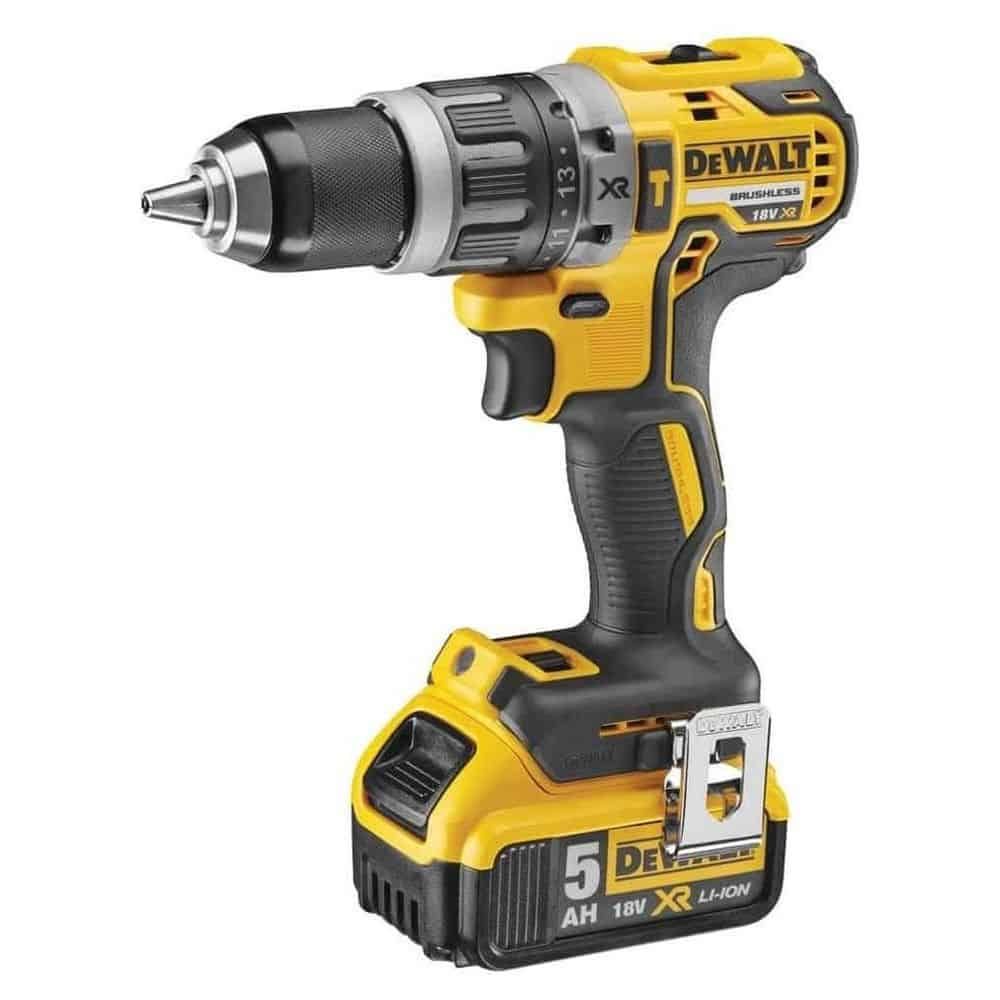
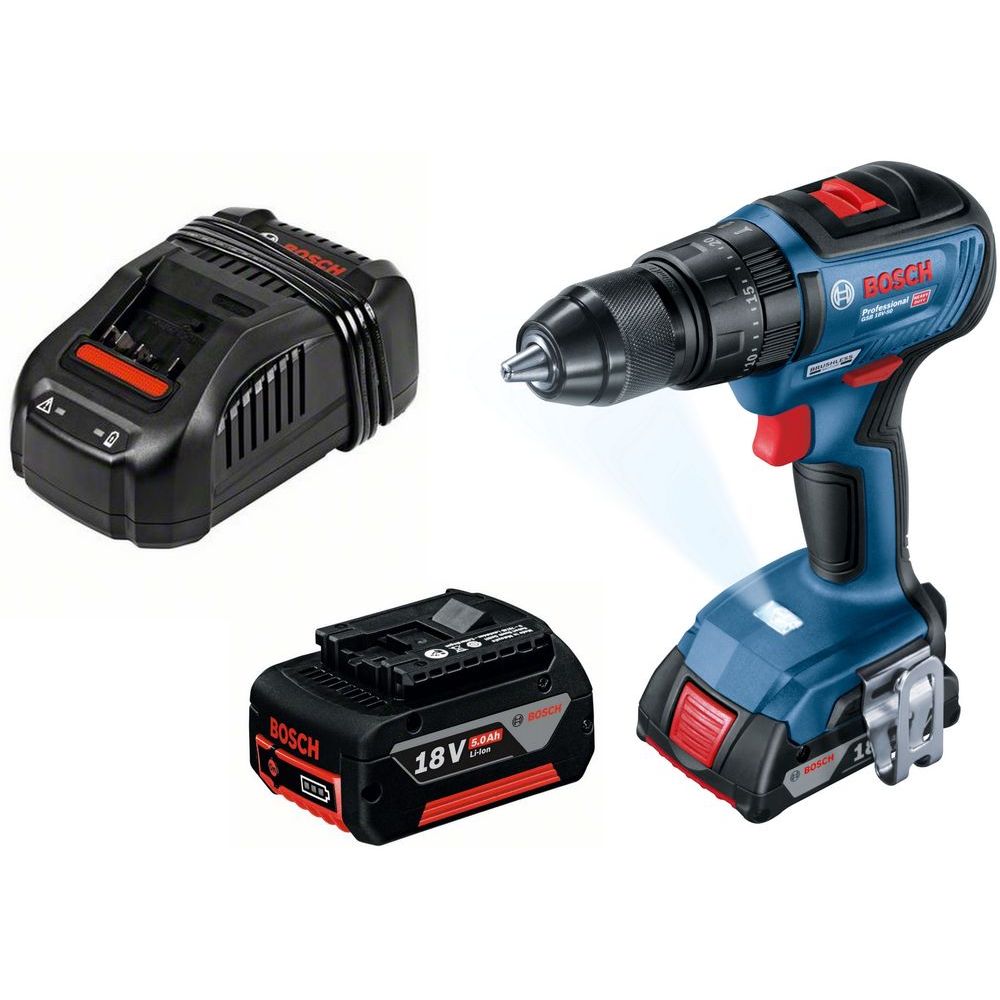
Key Factors to Consider When Buying a Rotary Hammer
Choosing the right rotary hammer is crucial for optimal performance, safety, and long-term durability, especially when working with demanding materials such as concrete, stone, and masonry. Here are the key factors every buyer should evaluate before buying rotary hammers.
1. Power and Impact Energy
When it comes to impact energy, measured in Joules (J), it's the key metric that indicates how effectively a tool can break through tough materials. For light-duty drilling tasks, such as installing small anchors, plugs, or creating conduit holes, a tool with an impact energy range of 2 to 3 Joules is sufficient.
Moving up in intensity, medium-duty construction and renovation work typically requires tools with 3 to 5 Joules of impact energy. For more demanding applications, such as heavy-duty chiseling, demolition, rebar penetration, and large-diameter core drilling, tools with an impact energy ranging from 5 to over 12 Joules are necessary. Higher Joules mean that you can achieve deeper and faster penetration with less effort.
2. Motor Type: Brushed vs. Brushless
The motor has a direct impact on power efficiency, the tool's lifespan, and its maintenance needs.
Brushless Motors
Rotary Hammers with brushless motors have higher efficiency and longer runtime. They also have less heat buildup, which is critical in UAE temperatures. They usually require low maintenance and have a longer lifespan. They provide more consistent power under load.
Brushed Motors
Rotary hammers with brushed motors are more affordable but require periodic maintenance, such as brush replacement. They are less energy efficient compared to brushless versions. However, for professionals, brushless rotary hammers provide better long-term value and durability.
3. Ergonomics & Anti-Vibration Technology
Rotary hammers can create a lot of vibration, which may cause fatigue and safety issues. To improve user comfort and safety, consider these features before choosing one.
- Anti-vibration technology or anti-vibration handles
- Rubber grips
- Balanced weight
- Soft-start controls
- Adjustable side handles
Reducing vibration helps meet safety standards and lessens user fatigue during long drilling or chiseling tasks.
4. Corded vs. Cordless Rotary Hammers
Cordless (Li-Ion, Brushless)
Cordless rotary hammer drills has more mobility on job sites. They are Ideal for overhead work and tight spaces. Cordless rotary hammers are fast-growing segment due to powerful batteries (36V / 40V / FLEXVOLT)
Corded
Corded rotary hammers offer unlimited runtime as they are always connected to a power supply. They provide better sustained performance for heavy-duty work and are highly preferred at construction sites with continuous load requirements.
Safety and Compliance When Using Rotary Hammers
Safety is essential when using rotary hammers in environments where workers frequently encounter reinforced concrete, high temperatures, and challenging construction conditions. Following safety regulations not only protect workers but also ensure companies comply with local laws and maintain the long-term performance of their tools.
1. Personal Protective Equipment
Operators must prioritize safety by wearing appropriate PPE. They should wear safety goggles or face shields to guard against flying debris, protecting their eyes and face during the operation. Given that rotary hammers can generate noise levels that exceed safe limits, using ear muffs is also ideal to prevent potential hearing damage.
Additionally, operators should use dust masks or respirators, specifically N95 or P100 types, when drilling into concrete to safeguard against inhaling harmful particles. To improve grip and control while minimizing vibration, cut-resistant gloves are recommended. Steel-toe footwear is critical to prevent foot injuries, particularly during demolition tasks.
2. Anti-Vibration and Ergonomic Safety
When using rotary hammers, it's important to consider the significant vibration they produce, as extended exposure can lead to fatigue and strain. To mitigate these effects, look for tools that come equipped with Active Vibration Control (AVC) and features like vibration-reduction handles.
3. Dust Management & Silica Control
When drilling concrete, it's essential to take measures to minimize the release of dust and debris, which can pose serious respiratory risks. To stay compliant with regulations, it's recommended to use dust extractors or vacuum attachments to capture dust at the source. Implementing wet drilling techniques can also help reduce dust generation. Maintaining regular filter cleaning for both cordless and corded tools is crucial to ensure their effective operation.
4. Electrical & Battery Safety
When using both corded and cordless rotary hammers, it's crucial to handle electrical components with care. Begin by inspecting the cords and plugs for any signs of damage, as this can prevent potential hazards. If you’re working in wet or outdoor areas, it’s important to use RCD or GFCI protectors to ensure your safety.
For cordless tools, pay close attention to the battery temperature, particularly in the extreme weather condition. It's advisable to store batteries away from direct sunlight and flammable materials to avoid any risk.


Common Rotary Hammer Applications
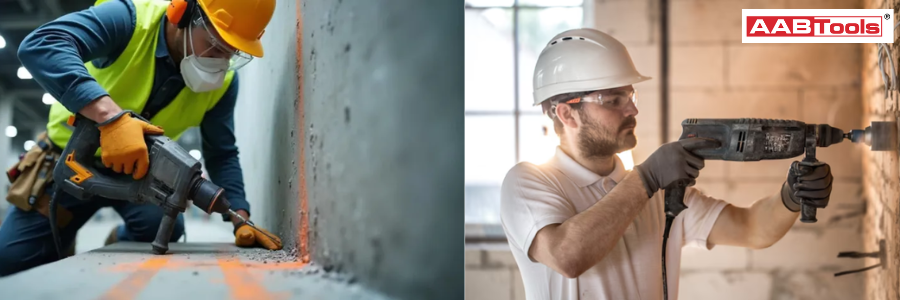
Professional Construction & Contracting Applications
Rotary hammers are an essential tool that cannot be neglected on construction sites and development areas. They have a wide range of applications within this sector.
1. Drilling Anchor Bolts & Fasteners
Drilling anchor bolts and fasteners, including heavy-duty anchor bolts, expansion anchors, anchor plates, and base plates, are vital for structural connections in towers, villas, warehouses, and steel structures in various construction projects.
2. Rebar Doweling & Penetration
Rotary hammers are commonly used to create holes for rebar dowels, penetrate reinforced concrete at work sites, and prepare slabs and beams for extensions or load transfer.
3. Chasing Concrete for Conduits
Fit-out and MEP contractors depend on rotary hammers for various key tasks, including the installation of electrical conduits, plumbing, and drainage lines. They also utilize these tools for creating penetrations for HVAC ducts and pipes, as well as for opening channels needed for cable trays and pipe sleeves.
4. Renovation & Demolition Work
Hammer-only mode in rotary hammers is extensively utilized for a variety of tasks, including breaking ceramic tiles and removing stone cladding. It's also effective for chiseling plaster and masonry, making it a valuable tool for construction and renovation projects. Hammer-only mode is ideal for cutting channels and eliminating concrete edges, allowing for precision and efficiency in both small and large-scale jobs.
Industrial Applications of Rotary Hammers
1. Facility Management Teams
Facility Management companies use rotary hammers for applications such as mounting equipment securely onto concrete walls, ensuring stability and safety. They also use rotary hammers to create access points for electrical and plumbing repairs, allowing for efficient installation and maintenance.
2. Industrial Maintenance & Plant Shutdowns
In factories, rotary hammers are used for removing damaged concrete around machinery bases, ensuring a safe and stable foundation for equipment. Rotary hammers are also employed to drill holes for cable routing and mechanical anchors, streamlining the installation of electrical and structural components.
3. Oil & Gas Sector
Onshore and offshore teams use rotary hammers for a variety of tasks. They engage in heavy-duty anchor hole drilling. They are involved in the installation of racks, trays, and support brackets, which are essential for organizing and securing equipment.
Choose AABTools for Your Rotary Hammer Drills in the UAE
From drilling anchor holes in reinforced concrete, chiseling tiles during renovation, or carrying out heavy-duty demolition work, having the right rotary hammer drill can transform the quality of your job. At AABTools, we offer a comprehensive range of rotary hammer drills suitable for professionals, general contractors ensuring you always have the power and durability your work demands.
AABTools supplies 100% genuine rotary hammer drills backed by full manufacturer warranties, featuring industry-leading brands like Makita, DeWalt, Bosch, Gazelle, and Metabo all available under one roof. Whether you need a compact SDS-Plus rotary hammer for everyday drilling or a powerful SDS-Max model for heavy demolition and large-diameter holes, our product range covers every application and jobsite requirement.
With local UAE stock, fast delivery, and expert pre-sales support, our specialists are always ready to help you choose the ideal rotary hammer based on your workload, material requirements, and budget. You can also visit our AABTools Experience Center in Dubai to test tools in person, compare different models, and get hands-on guidance before making a decision.